
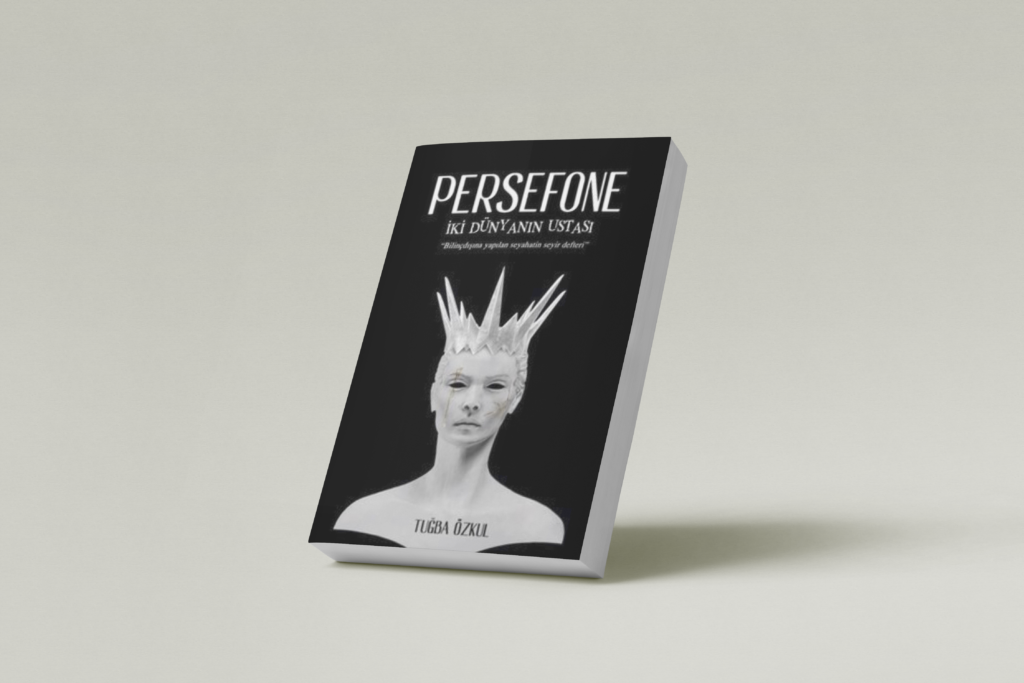
What is the book about?
The book is about how to access the content of the unconscious. It offers the reader an alternative suggestion on how to do this, a suggestion that I have tried and tested.
What is Unconscious Content?
I could give you a whole list, but I think Jung’s definition is the most accurate: “An irrational response to an unknown question.” It’s every thought, idea, or phenomenon that flashes through your mind, beyond imagination and planning, appearing and disappearing without reason, without warning. In addition, it includes the material used in your dreams, all your stress responses, moments of daydreaming, synchronicities, feelings, your preferred colors, sounds, places, objects, symbols, and everything else on your list of absences. Why is the list so long? Because everything where conscious neocortical activity isn’t involved, even the origins of your conscious decisions, constitutes unconscious content. In other words, perhaps everything that occupies you for 19-20 hours a day.
What does “an irrational response to an unknown question” mean?
“When this happens, I feel this way, it feels like this is caused by that, for some reason, when I do this, this always comes to mind…” We experience things that make us utter sentences like these. Then, “But why do you think or feel this way?” Any content that follows the answer “I don’t know” when asked a question. Because unconscious content is not something you consciously want.
What is the purpose of accessing your unconscious content?
In my opinion, it reveals the untapped possibilities of the human body and soul and causes an expansion in consciousness. Becoming familiar with one’s own unconscious content brings one step closer to oneself each time. So why is this important? It helps the subject to be nourished from within, not from without. To be nourished from within means that happiness, joy, and growth originate from you and depend on you. Those who are nourished from within are those who learn to teach themselves. In this life, there is no more dangerous opponent than someone who teaches themselves to learn. This transforms you into an unpredictable and unstoppable powerhouse.
How to Read the Content of the Unconscious?
Jung speaks of accessing the content of the unconscious through writing and living. I may have found a way to access the content of the unconscious through the body, which is for the subject to create their own ritual and practice it regularly and consistently. Because you can’t explore an unknown planet by developing theories on paper. You need to go into a workshop and build a spaceship. If you want to travel to your unconscious and discover your unknown potential, your body and its technology will be the spaceship you need. The engineering, however, is entirely undertaken by the ritual the subject designs for themselves. Also, the spinal movements I’ve developed are very helpful in accessing the content of the unconscious. Although the spine seems like a unique system in itself, it is actually the mobile part of the brain—the brain’s arm, leg, and fingers. Therefore, when you shake it correctly, fragments from the unconscious are released.
What is this ritual, and how is it performed?
An activity you’ve always wanted to do but couldn’t, an action, outfit, or location you’ve always imagined yourself in, and also everything you constantly do and can’t stop doing, everything you’re drawn to… I emphasize “drawn” here because everything you’re passionately drawn to is a building block of the ritual you’ll create. Also, you absolutely need to learn something new; self-learning comes into play here because it’s the backbone, the indispensable element, of the ritual. After all, you’re designing a ritual for yourself and teaching yourself how to perform it. This self-learning thing is like a fingerprint; everyone learns differently, and that difference is your unconscious content. You can’t learn to fly a helicopter on your own, but a helicopter isn’t the right material for a ritual anyway. It needs to be accessible and something you can try every day without needing anyone. Because the activity is the means, the purpose (i.e., your unconscious content) is every kind of influence you give to that activity. That missing element is your unconscious content. Similarly, it’s not the material you choose for your ritual, but how you design the material and your response to the results that constitutes your unconscious content.